




“Stay Ahead of the Game: Unlock the Future of Learning with the Latest LMS Trends in 2023!”
Introduction
Stay Ahead of the Game: LMS Trends to Watch in 2023 is a comprehensive guide to the latest trends in Learning Management Systems (LMS). This guide will provide an overview of the current state of the LMS industry, as well as a look at the emerging trends that will shape the future of the industry. We will explore the latest innovations in technology, the changing needs of learners, and the impact of new regulations on the LMS landscape. By understanding the current trends and anticipating the future, organizations can stay ahead of the game and ensure their LMS is up-to-date and meeting the needs of their learners.
Take the Paradiso LMS Tour by Role
Pick the view that matches your job. Each tour is a separate walkthrough, so you can take one or all three.
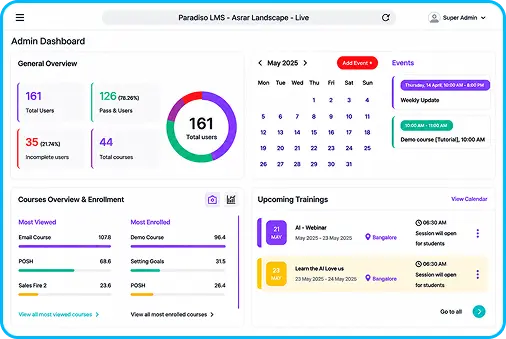
LMS Admin Dashboard
For L&D admins who need one place to manage users, courses, reports, automation and certifications. See how daily LMS operations come together in one dashboard.
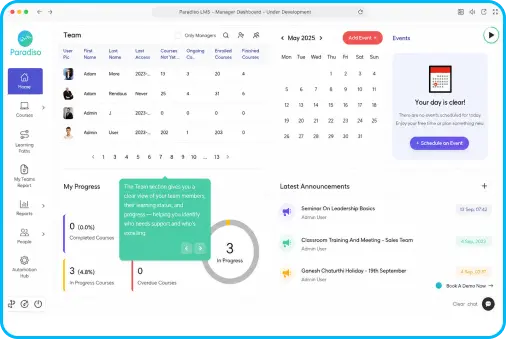
LMS Manager Dashboard
For team leads who need to know who has finished training and where the gaps are, without manual reporting. See how progress and completion status appear in one view.
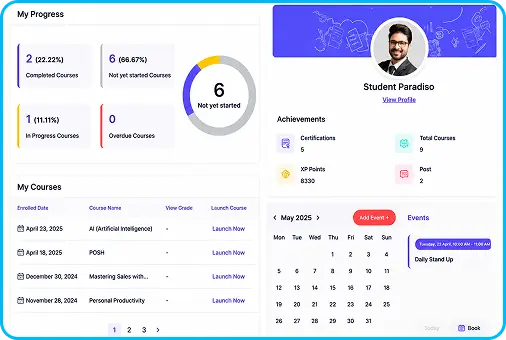
LMS Learner Dashboard
For anyone who wants to know what learners will actually experience. See how employees find courses, track progress, complete assignments and view certifications.
The Benefits of Cloud-Based Learning Management Systems
Cloud-based learning management systems (LMS) offer a range of benefits to educational institutions, businesses, and other organizations. These systems provide a secure, centralized platform for delivering online learning content, tracking student progress, and managing educational resources. By leveraging the power of cloud computing, cloud-based LMSs can provide a number of advantages over traditional on-premise systems. One of the primary benefits of cloud-based LMSs is scalability. Cloud-based systems can easily be scaled up or down to meet the needs of any organization. This allows organizations to quickly and easily add or remove users, courses, and other resources as needed. This scalability also allows organizations to save money by only paying for the resources they need. Cloud-based LMSs also offer improved security. By hosting the system in the cloud, organizations can ensure that their data is secure and protected from unauthorized access. Cloud-based systems also provide automatic backups, ensuring that data is not lost in the event of a system failure. Cloud-based LMSs also offer improved accessibility. With cloud-based systems, users can access their learning content from any device with an internet connection. This makes it easier for students to access their course materials and for instructors to manage their courses. Finally, cloud-based LMSs offer improved collaboration. By leveraging the power of the cloud, users can easily collaborate with each other in real-time. This makes it easier for instructors to provide feedback to students and for students to work together on projects. In summary, cloud-based learning management systems offer a range of benefits to educational institutions, businesses, and other organizations. These systems provide a secure, centralized platform for delivering online learning content, tracking student progress, and managing educational resources. Cloud-based LMSs offer improved scalability, security, accessibility, and collaboration, making them an ideal solution for organizations looking to improve their online learning capabilities.
How AI and Machine Learning are Transforming the LMS Landscape
The Learning Management System (LMS) landscape is undergoing a major transformation due to the emergence of Artificial Intelligence (AI) and Machine Learning (ML). AI and ML are enabling the development of more sophisticated and personalized learning experiences, as well as providing new opportunities for data-driven decision making. AI and ML are being used to create more personalized learning experiences for learners. AI-powered LMSs can analyze data from a variety of sources, such as student performance, course content, and user behavior, to create tailored learning paths for each individual. This allows learners to receive content that is tailored to their individual needs and interests, resulting in more effective learning outcomes. AI and ML are also being used to provide more accurate and timely feedback to learners. AI-powered LMSs can analyze data from a variety of sources, such as student performance, course content, and user behavior, to provide real-time feedback to learners. This feedback can be used to help learners identify areas of improvement and adjust their learning strategies accordingly. Finally, AI and ML are being used to provide data-driven decision making for LMS administrators. AI-powered LMSs can analyze data from a variety of sources, such as student performance, course content, and user behavior, to provide administrators with insights into how their courses are performing. This data can be used to make informed decisions about course design, content, and delivery. In conclusion, AI and ML are transforming the LMS landscape by enabling the development of more personalized learning experiences, providing more accurate and timely feedback to learners, and providing data-driven decision making for administrators. As AI and ML continue to evolve, the possibilities for LMSs are endless.
The Impact of Mobile Learning on Corporate Training
Mobile learning has become an increasingly popular tool for corporate training in recent years. This technology has revolutionized the way companies train their employees, allowing them to access training materials and resources from anywhere, at any time. The impact of mobile learning on corporate training is far-reaching. It has enabled companies to provide more effective and efficient training to their employees. Mobile learning allows employees to access training materials and resources on their own time, allowing them to learn at their own pace. This flexibility has enabled companies to provide more personalized training experiences to their employees, which can lead to improved performance and increased engagement. Mobile learning also allows companies to provide more engaging and interactive training experiences. With the use of mobile devices, companies can create interactive training modules that can be accessed from anywhere. This allows employees to learn in a more engaging and interactive way, which can lead to better retention of the material. In addition, mobile learning has enabled companies to reduce their training costs. By providing training materials and resources through mobile devices, companies can reduce the need for physical training materials and resources, which can save them money. Furthermore, mobile learning can reduce the need for in-person training sessions, which can also save companies money. Overall, mobile learning has had a significant impact on corporate training. It has enabled companies to provide more effective and efficient training to their employees, while also reducing their training costs. By providing more engaging and interactive training experiences, companies can ensure that their employees are better prepared to perform their jobs.
The Growing Popularity of Gamification in Corporate Training
The use of gamification in corporate training is becoming increasingly popular as businesses recognize the potential of this approach to engage and motivate employees. Gamification is the application of game-like elements to non-game contexts, such as corporate training. It involves the use of game mechanics, such as points, levels, leaderboards, and rewards, to encourage employees to complete tasks and achieve goals. The use of gamification in corporate training has been shown to have a number of benefits. It can help to increase engagement and motivation, as employees are more likely to be interested in tasks when they are presented in a game-like format. It can also help to improve knowledge retention, as employees are more likely to remember information when it is presented in an engaging and interactive way. Additionally, gamification can help to foster a sense of competition and collaboration among employees, as they strive to achieve the highest scores and compete for rewards. The use of gamification in corporate training is becoming increasingly popular as businesses recognize the potential of this approach. Companies are investing in gamification platforms and tools to create engaging and interactive training experiences for their employees. These platforms allow businesses to create custom training programs that incorporate game mechanics, such as points, levels, leaderboards, and rewards. Additionally, businesses can use these platforms to track employee progress and performance, allowing them to measure the effectiveness of their training programs. Overall, the use of gamification in corporate training is becoming increasingly popular as businesses recognize the potential of this approach to engage and motivate employees. By investing in gamification platforms and tools, businesses can create custom training programs that incorporate game mechanics and track employee progress and performance. This can help to increase engagement and motivation, improve knowledge retention, and foster a sense of competition and collaboration among employees.
Conclusion
In conclusion, the trends in Learning Management Systems (LMS) are constantly evolving and it is important to stay ahead of the game. By understanding the current trends and anticipating the future trends, organizations can ensure that their LMS is up-to-date and able to meet the needs of their learners. In 2023, we can expect to see more emphasis on personalization, mobile-friendly platforms, and the use of AI and machine learning to improve the learning experience. By staying ahead of the game, organizations can ensure that their LMS is able to meet the needs of their learners and provide them with the best possible learning experience.Stay ahead of the game and stay informed on the latest LMS trends in 2023! Check out the latest trends and insights from Paradiso LMS to ensure you’re up to date on the latest advancements in the industry. Click here to learn more!
text